Core & Lower Body Strength For Lower Back Pain
Glutes & quads are the biggest muscle groups in your body. Build them up & that will reduce the stress & pressure on your spine, which will reduce and prevent lower back pain recurrence in the future!
LOW BACK PAIN

This class is for you if...
If your pain back has started to get better & you want to further improve your strength & flexibility to get rid of the last bit of pain & prevent back pain from happening again in the future. (Back pain is known to return again & again in the future if you do not strengthen your core and lower body muscles).
This class will be helpful for those who have lower or middle back pain, side of hip or front of hip pain as it is a combination of stretches to relieve aches and stiffness & more importantly it combines basic strength exercises that target the big muscle groups in your body including your buttock and thigh muscles.
This class includes the following exercises:
1. Seated Twists
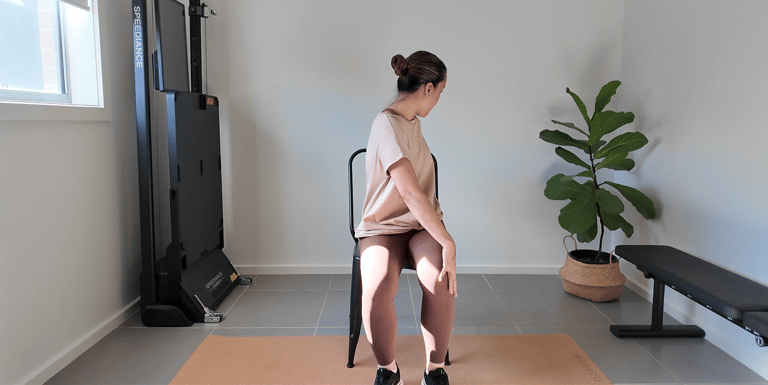
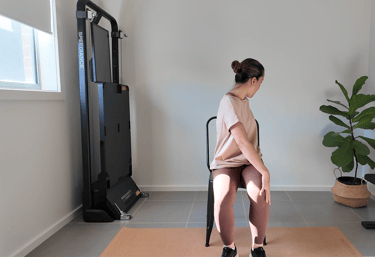
This stretch helps to restore movement and relieve tension in your middle and upper back. If the middle and upper part of your spine is stiff and not moving, this will place unnecessary stress on your lumbar spine and its' structures including your discs, nerves, muscles and joints.
Why we do it: Seated twists, stretch the middle to upper section of your spine, restoring movement and also relieving pain in the surrounding muscles.
How to: Sit on the edge of your seat with your knees and feet hip width apart.
Cross your right arm over your left leg, and place your left arm either around your back rest or behind you, on the seat. Use your right arm to push yourself further into a twist stretch.
Repeat 4 x 20 seconds each side
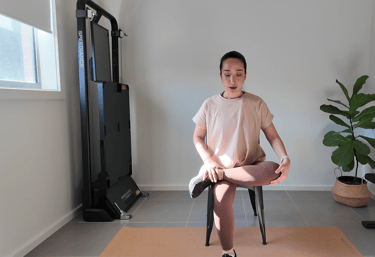
2. Piriformis Stretch
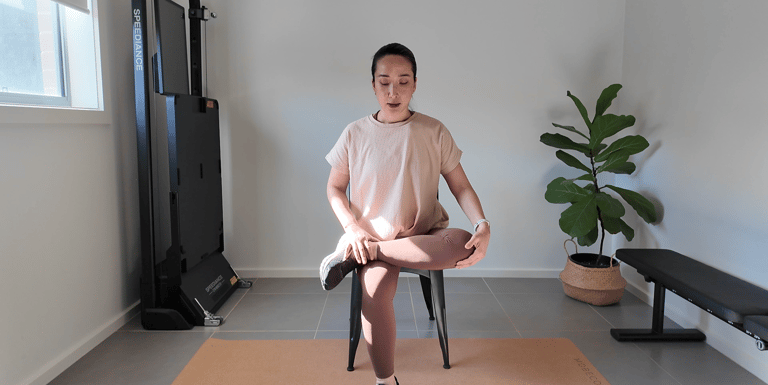
The piriformis muscle is a tiny muscle in your buttock that restricts hip movement, which in turn, affects your ability to bend forward. When the piriformis muscle is tight and taught, it can also press onto the sciatic nerve, which exits underneath it, causing sciatica symptoms.
Why we do it: Stretching the piriformis muscle will help restore normal hip and lumbar spine movement while also potentially reducing pressure on the sciatic nerve. Not only that, but a tight piriformis muscle can itself be extremely painful so stretching it reduces pain in the actual muscle.
How to: Sit on the edge of your chair, cross your left leg over your right knee. Arch your lower back, stick your chest forward and lean forward at your hips until you feel a stretch along the outer hip and thigh.
Repeat 4 x 20 seconds each side


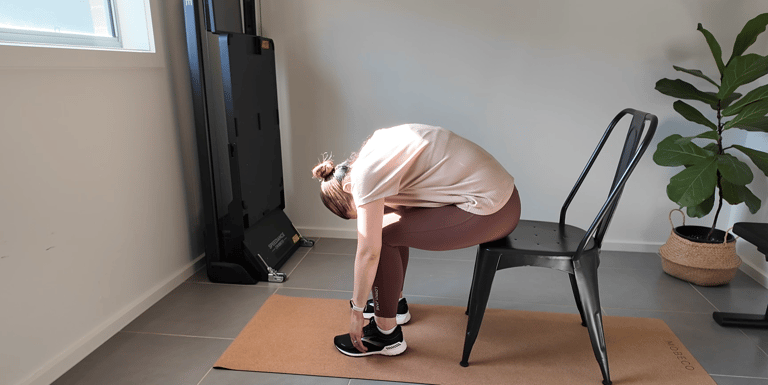
3. Curl Downs
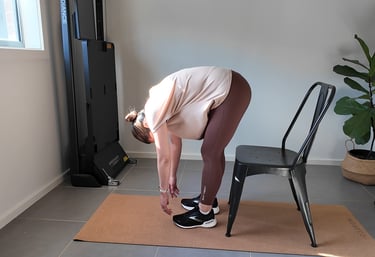
Why we do it: Over time the muscles in the lower back, in the arch of your back shorten, particularly if you stand a lot for example, to do kitchen prep work or you're in a job which requires you to stand for the majority of the day like grocery store cashiers.
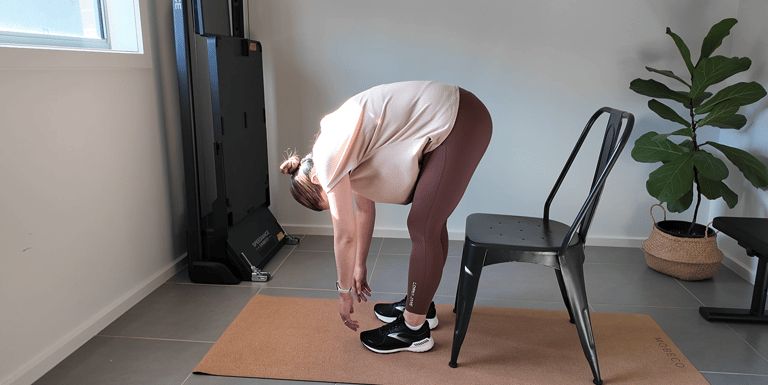
Modifications: If you're lacking balance or elderly and feel dizzy at times, do it sitting on the edge of the chair. If you have no other health ailments, you can do it standing up.
How to: Tilt your chin down to your neck, let your arms dangle and gentle curl down imagining that you're lowering one vertebrae (spine bone) at a time. Let your body relax and hang for a few seconds and gentle roll up, imagining that you're stacking one vertebrae on top of each other until you are upright.
Repeat 2-3 times slowly
4. Seated Calf Raises
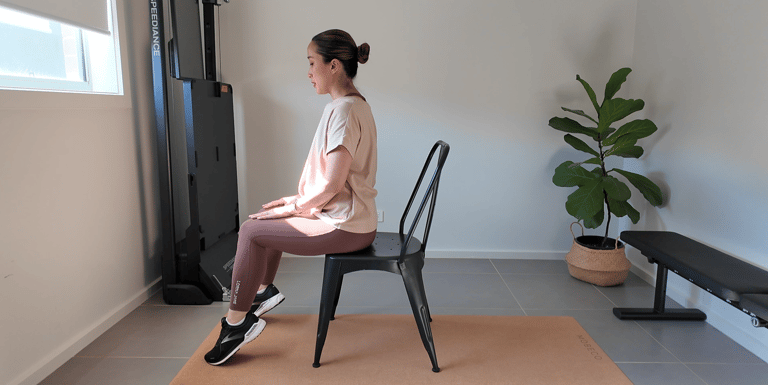
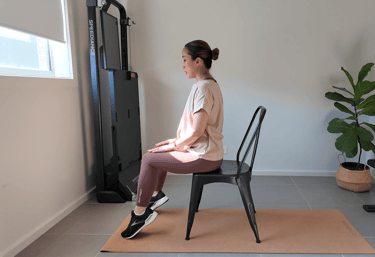
Why we do it: Weak calf muscles mean poor shock absorption when walking. That means that if you walk for long periods on hard concrete footpaths, warehouse floors or on tiles, your back experiences extra compounded stress in the lumbar spine causing pain and in serious cases, even stress fractures.
The bonus with this exercise is that it will also tone your calves (lower legs).
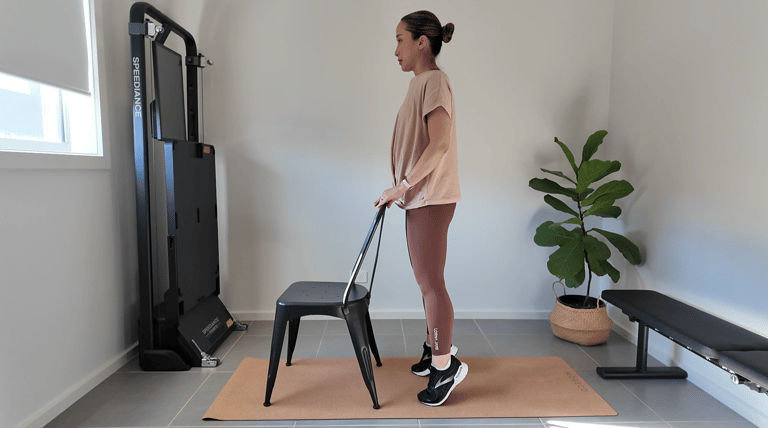
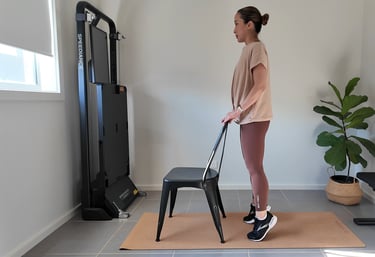
How to: Stand behind a chair or something sturdy for support. Slowly rise onto your toes, squeeze your calf muscles and hold for one second before slowly lowering down.
If you're elderly, extremely weak or lacking balance, or it's been a while since you've exercised, you can do this sitting down to start with over the next couple of weeks and then gradually move to standing calf raises.
Repeat 2 x 10 reps, 1 second hold
5. Calf Stretch
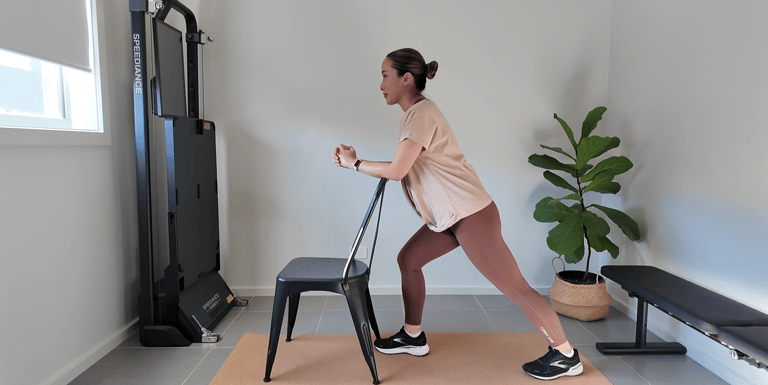
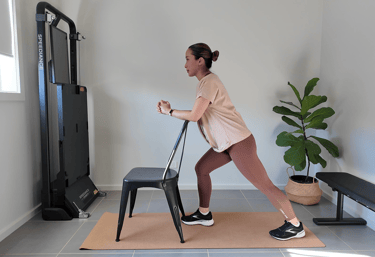
Why we do it: After doing calf raises your calf muscles will most likely feel tight or cramped and that's why we follow them with calf stretches.
How to: Place your left leg behind you keeping both feet flat on the ground. Press your left heel into the floor as you lean your right knee forward and hold that stretch for 20 seconds.
Repeat 4 reps each side, 20 second hold
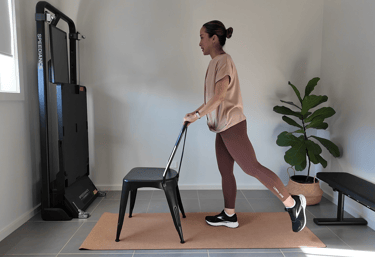
6. Standing Hip Extension
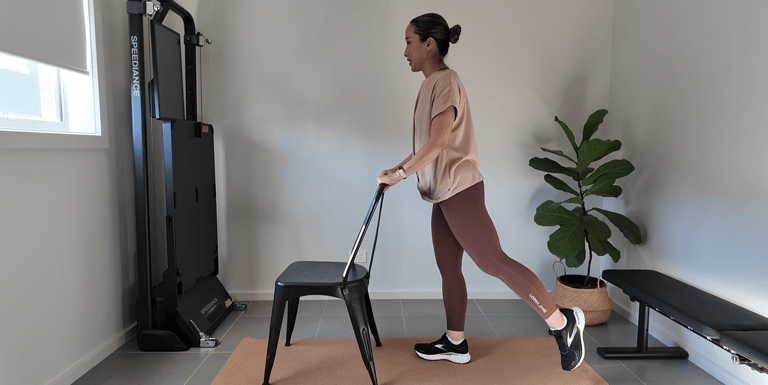
Why we do it: Hip extension exercises help to build up strength in your hip, bottom and hamstring muscles. It also builds up your balance.
How to: Hold onto a support like a chair, kitchen counter or wall.
Stand with your feet hip width apart and tighten your core.
Keeping your hips square and your left knee straight, extend your left leg back and squeeze your left glute muscle (bum muscle).
Hold for 1 second and repeat 10 times on the left side, keeping your hips and back steady. The movement should only be coming from your left hip and you should feel the work out in your buttock, hamstring and the standing leg's hip.
WARNING: If you feel it in your lower back it means that you're arching your back to achieve the movement. Try standing straight, tighten your core and squeeze your left bum muscle while extending your left leg back.
3 sets 10 repetitions, 1 second hold
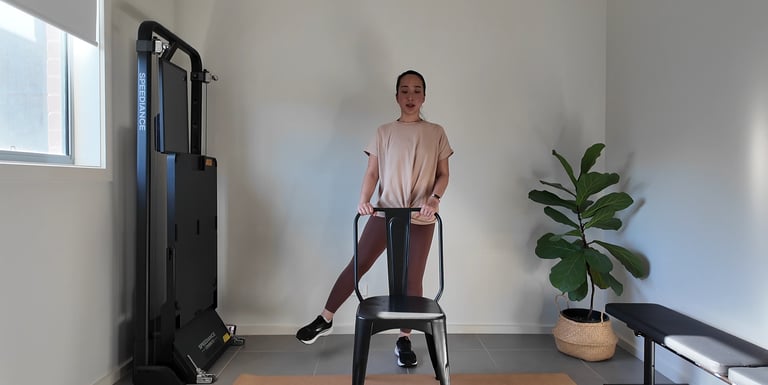
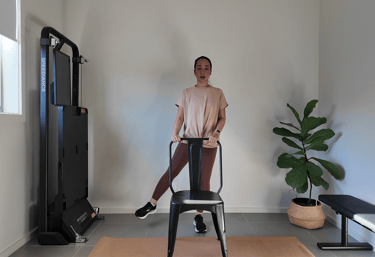
7. Standing Hip Abduction (Side Hip Raise)
Why we do it: Similar to the above hip extension exercise, this time we're going to raise your leg out to the side which will build strength in your side hip muscles, glute and challenge your core in a different way.
How to: Stand with your feet hip width apart and tighten your core.
Keeping your pelvis still, squeeze your left bum muscle and extend your right leg out to the side to about 20 degrees.
The challenge is to do this without leaning to the opposite side as your raise and lower your leg.
BIGGEST MISTAKE: Many of my patients start out by doing big side leg raises, where they kick their leg out and lean their body over. Keep your movements small, controlled and your back upright.
3 sets 10 repetitions, 1 second hold
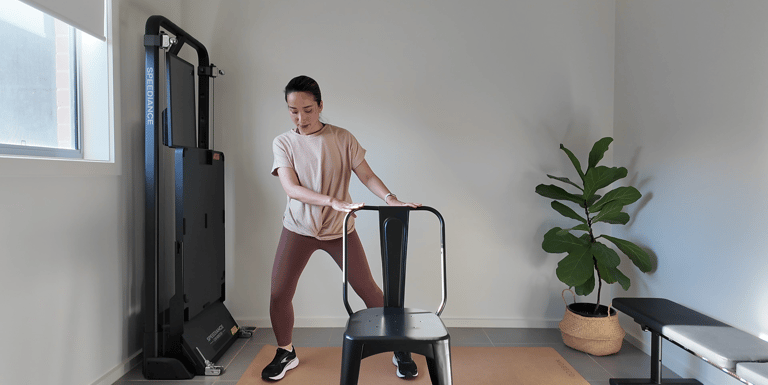
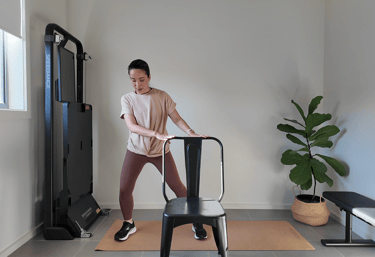
8. Side Lunges (Beginner Level)
Lunges are intimidating for most people, especially if you have struggled with knee pain. However, you're probably struggling with knee pain because you haven't done lunges. Pretty ironic hey?
These lunges are suited to beginners and when done right, will be pain-free.
Why do lunges? It strengthens your thigh muscles, bum muscles and hip muscles. These are the biggest muscles in your body and when they're strong, it takes the stress and load off of your spine when you're bending, lifting, carrying or using the stairs.
And guess what? If you currently have knee pain, doing these lunges correctly will also help resolve that too.
How-to: Stand with your feet hip width apart and tighten your core. Step your right leg out and bend your knee. Your knee should be in line with your second toe or the point of your shoe. Make sure that your knee is not travelling past your toes. Maintain this position for 5 seconds. If you're doing it correctly, you should feel the workout in the front of your thigh and your hip.
2 sets 10 repetitions, 5 second hold - each side
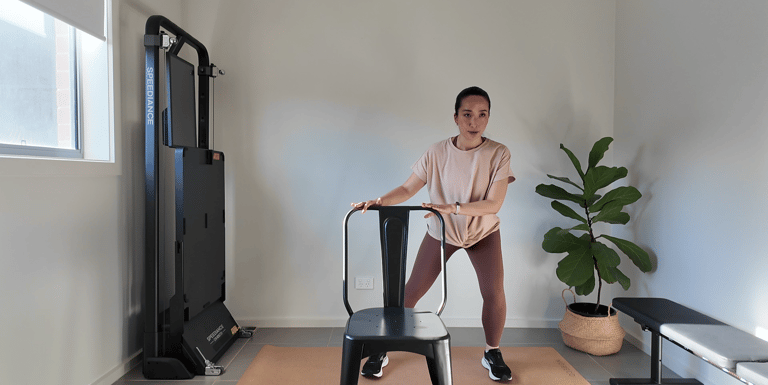
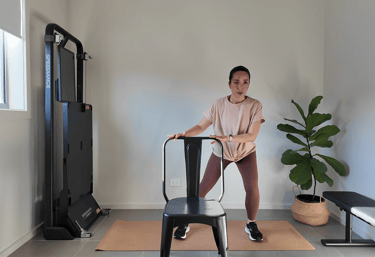
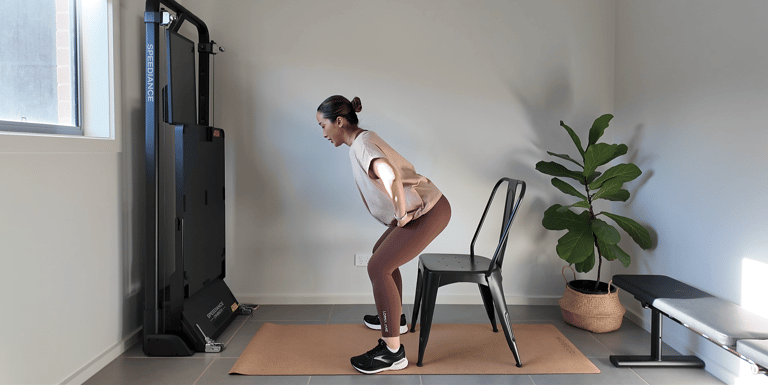
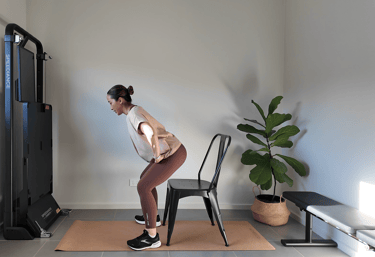
9. Quarter Squat
For some reason, most people I see in the clinic avoid squats and are scared of performing squats as an exercise. But guess what? You're doing squats throughout the day without realising it - when you're sitting down on a chair or when you go to the toilet, for example.
When done correctly, these shouldn't hurt your knees or your back.
Why do squats? Squats strengthen the biggest muscle groups in your body including your thighs and bum muscles. When these muscle groups are strong, it takes the stress and strain off of your lower back, hip and knee joints.
Quarter squats are a less intimidating exercise for beginners, especially for those who are scared of losing their balance due to painful weak knees or hips.
How-to: Stand with your feet slightly further than hip width apart and tighten your core. Keeping your knees facing the direction of your 2nd toes or the point of your shoe, stick your bottom back as you lean your chest forward while bending your knees slightly. Pretend that you're about to sit down on a chair.
Corrections: If it hurts your back, it means that you're over-arching your back as you're squatting so soften your lower back. If it hurts your knees, you may be leaning them too far forward or squatting too deep. Your knees should remain behind your toes.
3 sets 10 reps, 1 second hold
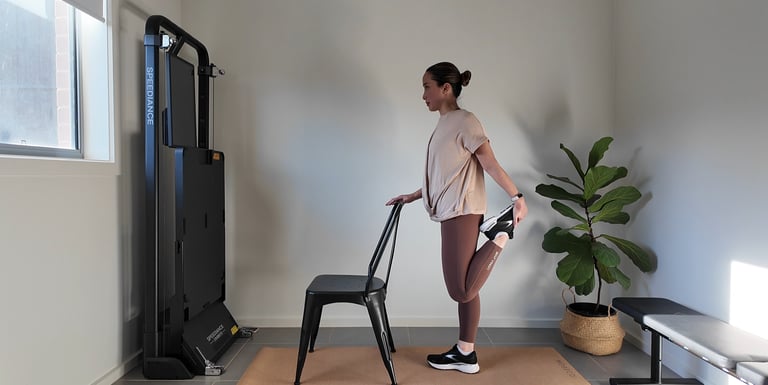
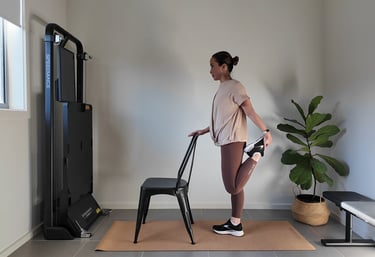
10. Quad Stretch
Most of us sit for long periods throughout the day, whether we are driving, working in an office or watching TV at home. Consequently, the muscles in the front of our hip and thigh adaptively shorten, which then alters your spinal posture by tilting your pelvis forward and this will cause ongoing pain in your lower back and hips.
Why do quad stretches? This exercise stretches the front thigh muscle, restoring your spinal and pelvis posture.
Also, if you have pre-existing front of knee pain, it will also help alleviate that too because a tight quadriceps squashes the knee cap into it's groove and hinders the knee caps' ability to glide when you're walking, squatting, climbing stairs etc.
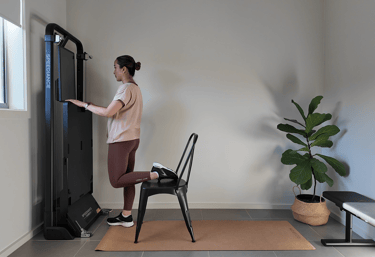
How-to: Stand with your feet hip-width apart. Holding onto support, pull your left foot toward your bottom and squeeze your left bottom, pressing your hip forward. This should give you a stretch in the front of your thigh.
Modification: For some, this stretch will be too strong and difficult to start with, causing more troubles. If that is the case, you can try using a chair to assist your stretch as shown in the 2nd image and in the exercise video linked above.
Corrections: If this causes pain in your lower back, then you're over-arching your back to achieve the stretch. You can try a few things, such as straightening your back, using a chair to assist your stretch as shown in image 2 or bring the knee forward slightly.
Repeat 4 x 20 second hold, each side
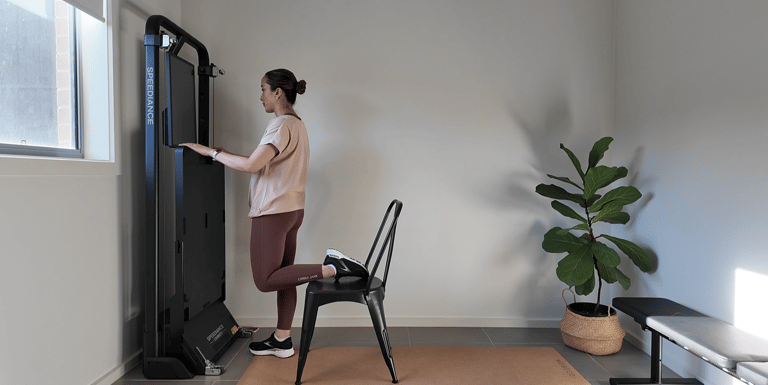
11. Supine Twist Stretch
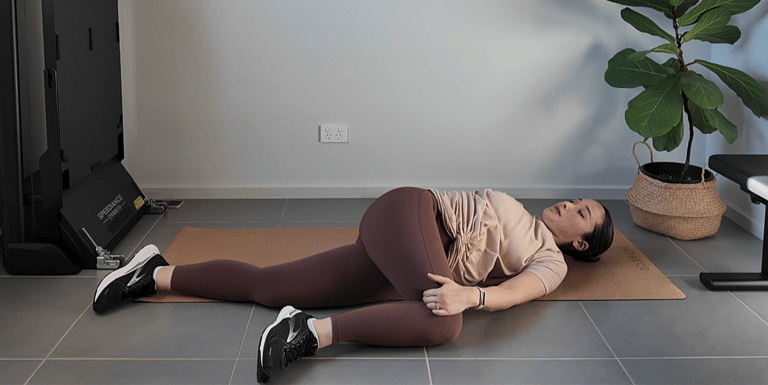
A great warm down stretch, the supine twist targets your lower spine, bottom and hip muscles.
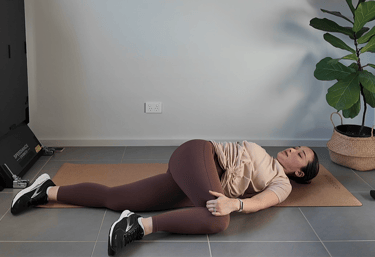
How-to: Lay on your back, lift up your right knee and pull it across.
With your left hand, pull the right knee toward the ground while keeping the right shoulder on the ground. Hold for 20 seconds.
You should feel this stretch along your bottom, lower back, side of thigh and if you're tight in your chest, you'll also feel it in your chest muscle, particularly on the right shoulder.
Repeat 2 x 20 seconds each side
How often should I do these?
I recommend that you do these exercises 2-3 times per week, for approximately 6-8 weeks. Exercise takes at least 6-12 weeks to be effective in building muscle and regaining flexibility.
Remember, never ever push into more pain while you're doing these exercises and always go see your doctor or physiotherapist if your back pain is not getting better.