Physiotherapy Core Exercises For Lower Back Pain - Medium Difficulty
For mild to moderate back pain. These are core strength exercises to strengthen your lower back, reduce back pain while also reducing recurrence of low back pain in the future.
LOW BACK PAIN

This class is for you if...
This class is perfect for those who have been struggling with lower back pain for a long time (months or even years!) and need to strengthen their core muscles to support the joints and discs in their lower back.
If you have ongoing pinching nerve pain, or pain radiating down your buttock or leg caused by a pinched nerve - core training is a MUST!
What are core muscles? I need to clear this common misconception. The core muscles that are responsible for protecting your back are NOT your six-pack muscles or ab muscles! (Although it's nice to have them during beach weather).
Core muscles responsible for protecting your back are known as the transversus abdominus (TA for short), multifidus and pelvic floor muscles.
Why we do core exercises: Have you tried stretching and cracking your back, or even going for regular massages to only have your back pain return again and again? It's because you're only treating the cause of the problem and the cause of back pain.
The core muscles mentioned above wrap around your spine and connect to each of your lumbar vertebrae. When they're nice and strong and working properly, they act as your body's natural back brace, protecting your lower spine and it's other components including discs, nerves and spinal cord.
When your core is weak and not doing it's job, the body says, "No worries - my core muscles aren't working, so we'll just stiffen up the spinal joints and it's surrounding muscles like the erector spinae, quadratus lumborum and tensor fascae latae muscles (words you can say to sound smart at a party) to achieve that stability!" This unfortunately causes increased pain and stiffness in your lower back, limits the spine's ability to move properly and can cause pinched nerves as well.
The following exercises below challenge your core muscles in different ways, just as you would use different levels of weights or machines when exercising your arm or leg muscles.
If you're just starting out with core, consider doing THIS CLASS first: ABSOLUTE BEGINNERS Core Exercises
This class includes the following exercises:
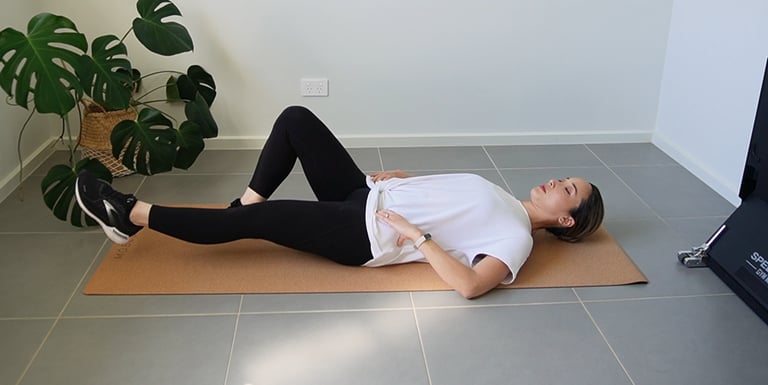
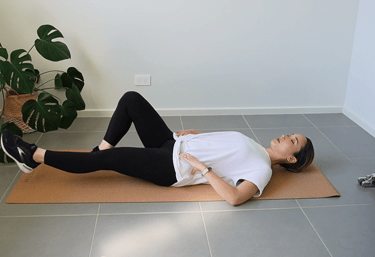
1. Leg Extensions
Lay on your back with your knees bent. Your knees and feet should be hip width apart
Place your fingers next on your core muscles, which are right next to your hip bones
Gently tighten the lower part of your abdomen and / or pelvic floor by 1/3 - you should barely feel them tense
Maintaining that hold, SLOWLY extend your left leg fully, hovering above the ground and return
Then extend your right leg fully and return
Relax your core muscles
Repeat 10 x
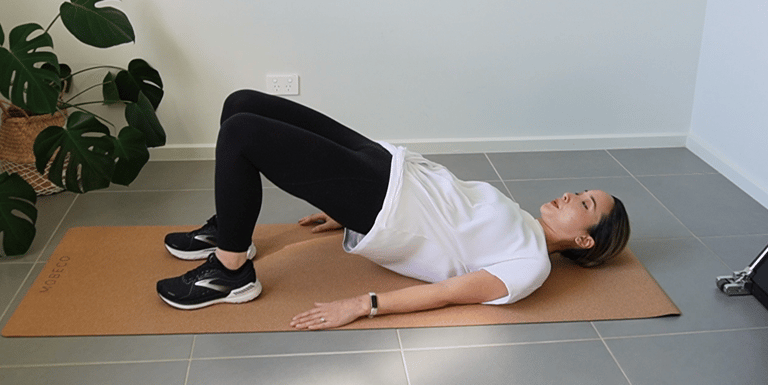
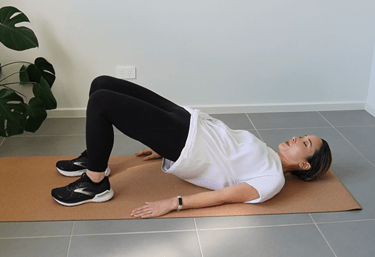
2. Bum lifts (Bridges)
Lay on your back with your knees bent.
Squeeze your bottom and lift your lower body off the ground - imagine that you're peeling each vertebrae of the spine off the floor as you lift up.
Lower your bottom - imagine you're lowering each vertebrae back onto the ground on your return.
Warning: This exercise should be felt in your bum and your thighs and NOT in your lower back, when done properly. If you can feel stress and strain in your back, make sure you squeeze your bottom and press through your heels to lift up.
Repeat 3 sets 10 reps 1-5 seconds
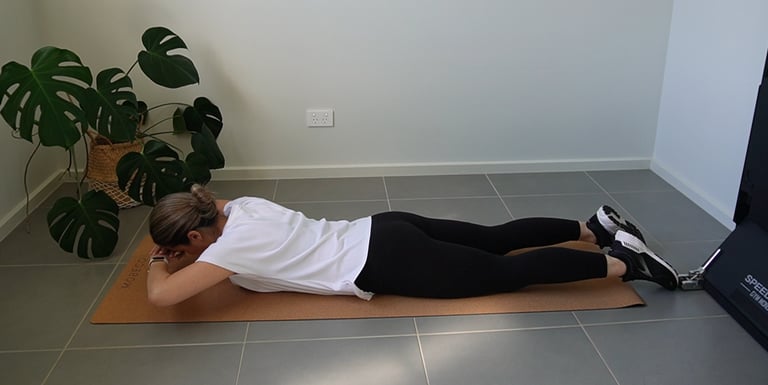
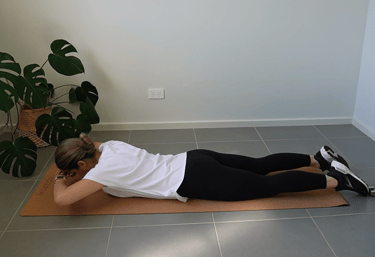
3. Lumbar Extensions
Place your hands, palm down under your forehead
Tighten your lower abdomen and pelvic floor muscles
Lift your upper body off of the floor by a few centimetres
Lower your body down
Repeat 3 sets 10 reps, hold for 1 second
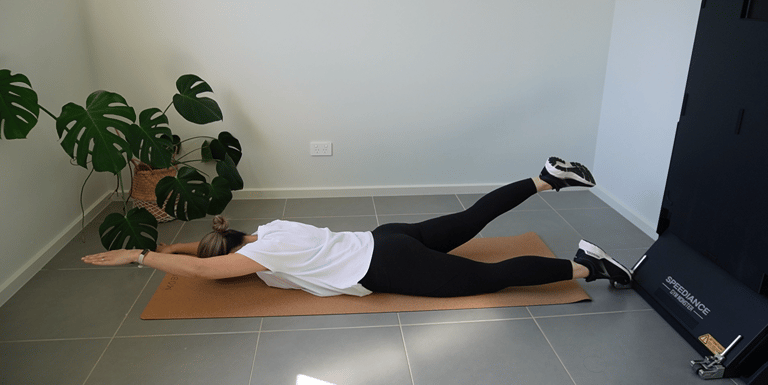
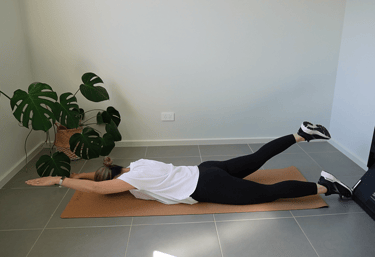
4. Swimmer (Opposite Leg & Arm Lift)
Lay on your tummy with your arms outstretched above your head
Tighten your lower abdomen and pelvic floor muscles
Lift opposite arm and leg, hold for 1 second and lower to the ground
Lift other arm and leg, hold for 1 second and lower to the ground
Repeat 10 x slowly
How often should I do these?
I recommend that you do these exercises 3 - 5 days per week for 4 weeks, in order to strengthen your core muscles and reduce your lower back pain.
This program is best combined with one of the Physio Workout stretch classes such as:
Remember, never ever push into more pain while you're doing these exercises and always go see your doctor or physiotherapist if your back pain is not getting better.